

Do Split System Fan Coils Need Makeup Air?
When designing a multi-tenant residential or hospitality hi-rise building there are several different choices for the air workout organisation. The arrangement selection must consider how the determination affects all the interested parties over the life of the building, including the developer, contractors, edifice direction, owner, and/or domicile owner in the case of a condominium. Ultimately, all these groups have common goals, just how they prioritize these goals may differ. The programmer is concerned with render on investment, the contractor is concerned with ease of installation and reduced call backs, the building management wants to reduce maintenance, and the possessor wants a reliable and comfortable infinite.
An easy choice to come across all these needs is a H2o Source Rut Pump (WSHP) organisation. This system provides a refrigerant based heating/cooling system in each unit that is served by a building level h2o loop. Fundamentally the dwelling house unit-based rut pump rejects/draws heat from a building water loop that has also has a heat addition or rejection system. The building system includes a cooling tower (heat rejection), boiler (heat add-on), and piping to transport the h2o. The unit system includes a compressor, reversing valve, mixing valve, coil, heat exchanger, and fan.
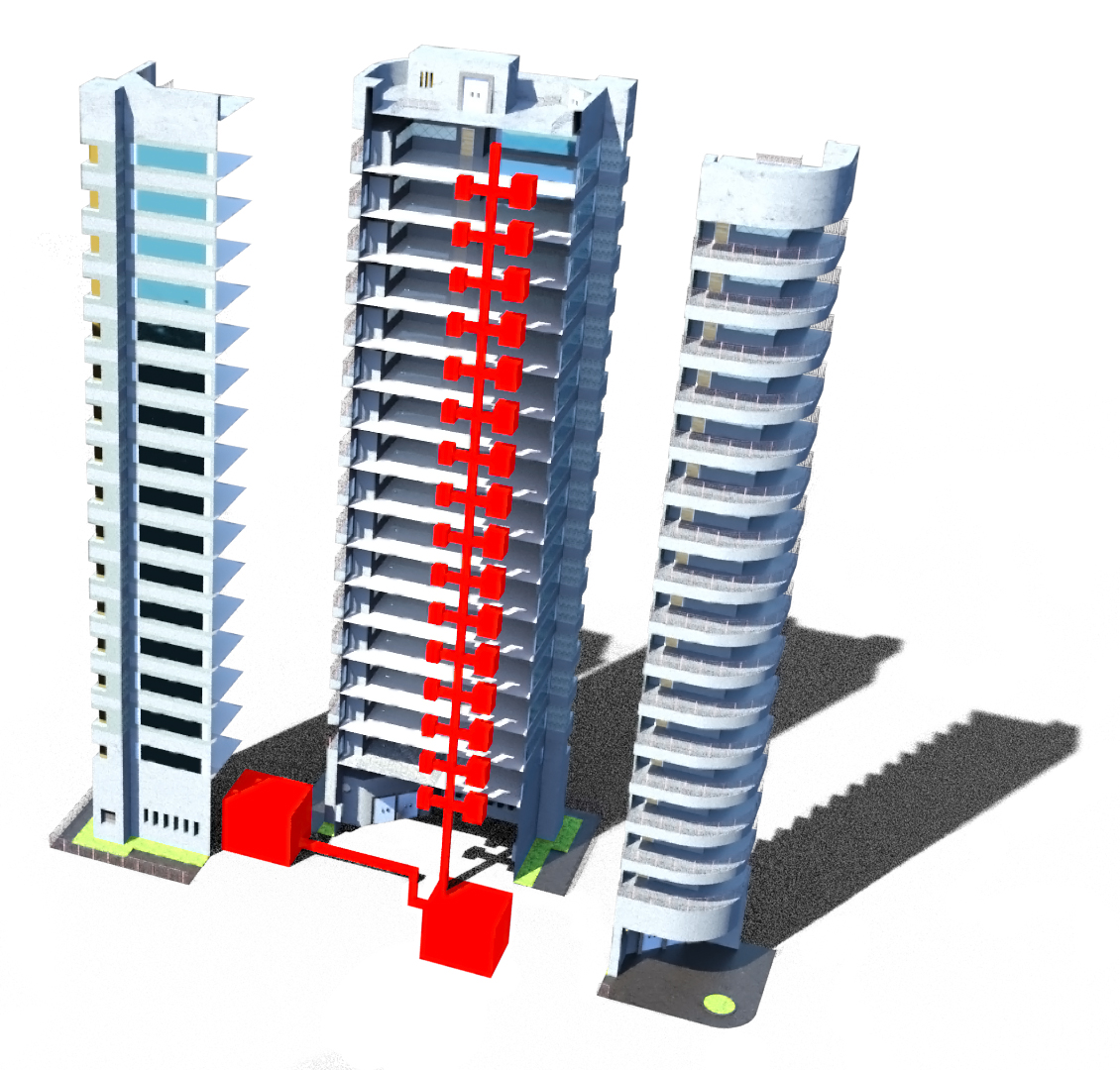
WSHP Systems benefit all interested parties
From a programmer standpoint the WSHP system provides a lower upward-front price than the traditional chilled water system. A chilled h2o organization would require a chiller, (possible cooling tower), boiler, iv-pipe insulated organization, and fan scroll systems. The WSHP arrangement eliminates 1 set up of pipes and doesn't crave insulation. Also, the cooling tower is less expensive, less complex, and easier to maintain than an air-cooled chiller system. A WSHP eliminates the demand for dwelling unit based external equipment equally you would demand from an air-cooled heat pump system, decreasing audio pollution and increasing the aesthetics of the building exterior. These benefits increment the return on investment of the building.
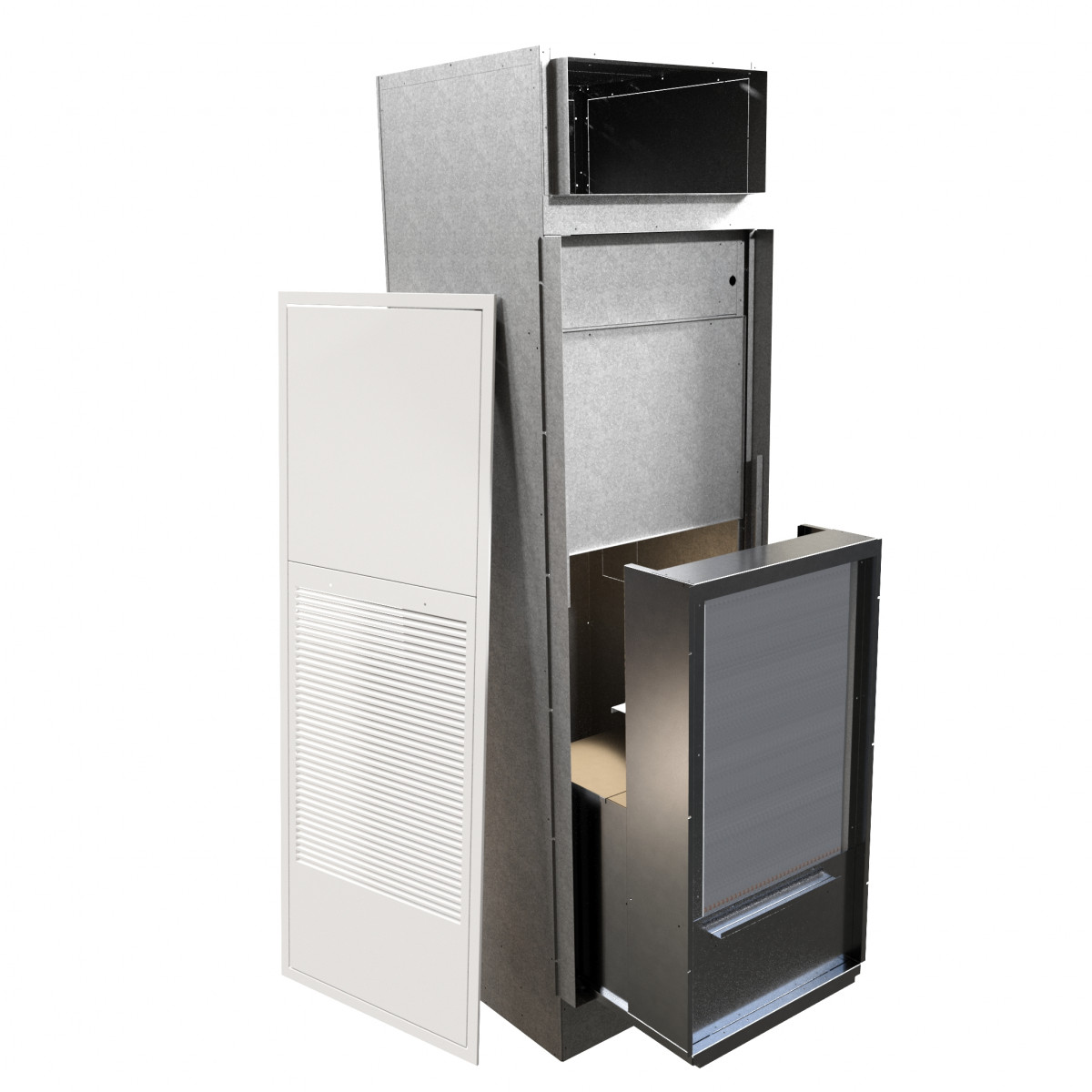
For the contractor a WSHP system is less complex and easier to install. Without the need for insulated pipes there is no worries of condensation causing an upshot and a recollect. In the case of the Nailor Serenity Vertical Stacked heat pumps, the assembly is modular. This allows the cabinets to be delivered and installed separately from the cooling cool and compressor chassis. This reduces run a risk of damage while on the task site.
A less circuitous organization likewise benefits the edifice management through reduced maintenance costs and worry. The modular design on the Tranquillity Vertical Stacked WSHP makes it easy to service, the building maintenance can easily replace the chassis while maintenance is performed. This reduces reanimation of the dwelling air conditioning. Concentrating virtually of the cooling piece of work, and electricity used, in the unit allows the conditioning costs to exist individually monitored. For a condominium development, it makes it easier for each unit to exist responsible for these costs, which is not easy for a centralized chilled water organisation.
Finally, for the occupant or dwelling house unit of measurement owner the highly efficient, reliable, and quiet arrangement reduces their costs while providing a comfortable space. A study published in 2011 found that a WSHP system reduced overall building free energy use by eight% when compared to an air-cooled chiller system and 20% compared to a h2o-cooled chiller system. Private owners who sympathize the implications of this will be attracted to a building that makes a low impact on the environs.
Culling Arrangement Comparison
When selecting the overall system design for a high-ascent residential development there are fundamentally two alternatives to the WSHP system: chilled h2o fan coil units and air-cooled oestrus pumps. Each of these designs have benefits and challenges when compared to the WSHP system.
Traditional Organisation
The near "traditional" HVAC system selected for big buildings is a chilled water system. With this pattern a chiller cools water that is delivered to the individual edifice units to cool the air in the space. This requires pumps, insulated supply piping, and insulated return pipe to connect the chiller to the individual units. Each unit of measurement volition have a fan gyre that will transfer the oestrus from the infinite to the water from the chiller. There will likewise be boiler system that delivers heated water to the individual units for transferring heat to the air in each infinite. This will require an boosted set up of pumps and insulated pipage.
Within the private dwelling there will be a single or multiple fan coil units. The chilled and hot water will be distributed to these fan coils for conditioning the room. The fan coils consist of heating/cooling coils with a valve packet, fan, and controls. When compared to the water source rut pump system, fan coils will operate quieter considering in that location isn't a compressor generating sound.
The challenges with the chilled h2o arrangement by and large come from the complication of the system. With multiple piping systems, pumps, and the chiller it is a system that will require a more skilled maintenance plan. The chilled h2o pipes tin can pose a condensation upshot if they are not properly insulated throughout the edifice. With a centralized heating/cooling plant the maintenance tin affect the entire building and could require some redundancy built into the organization, farther increasing cost and complexity.
During cooling chiller does provide some efficiency gains over the water source estrus pump arrangement when operating at total load, this still is rarely the example. For the heating a boiler organisation is only 80-90% efficient, much less than the 500% efficiency of the heat pump systems. In many detailed energy studies, the WSHP system has proven to provide better free energy efficiency than the traditional chilled water system.
From a edifice management standpoint, having a centralized system requires the measurement and neb back of the heating/cooling used at the unit level. This tin can be a claiming because unit of measurement owners aren't used to getting billed for this expense.
Air Cooled Rut Pumps
Another selection is to put air-cooled heat pump systems at each dwelling house. The biggest do good of this selection is that all cooling/heating charges tin can be monitored for each unit and all building level systems would be eliminated. Considering the conditioning is distributed throughout the units, the air-cooled design.
The claiming with this pick is by and large aesthetic. Each unit will require a condensing unit on the outside. For low rise multifamily these tin be located on the roof for less intermission to the external await of the building. This will centralize all the noise generated by these condensers and could be loud for the residents on the summit flooring. If the condensing unit of measurement is located on a balustrade of the individual dwelling it could bear on the await of the building and could crusade noise interruption to the dwelling. This would be much louder than the compressor associated with the WSHP system.
The selection of the mechanical arrangement for a high-rise residential edifice is a major investment in the time to come operations of the building. Understanding how this decision can touch those that touch the building throughout its lifecycle, will assistance to make the all-time choice. This is a get-go in a series of articles almost Water Source Heat Pump systems, applications, considerations, and equipment. If you'd like to know more than or have whatever questions please reach out the states.
Source: https://nailor.com/corporate/news/best-hvac-system-high-rise-condo-developments
Posted by: andersonarou1937.blogspot.com
0 Response to "Do Split System Fan Coils Need Makeup Air?"
Post a Comment