

What Conclusion Can You Draw Concerning The Base Compositions Of The Two Samples? Explain.
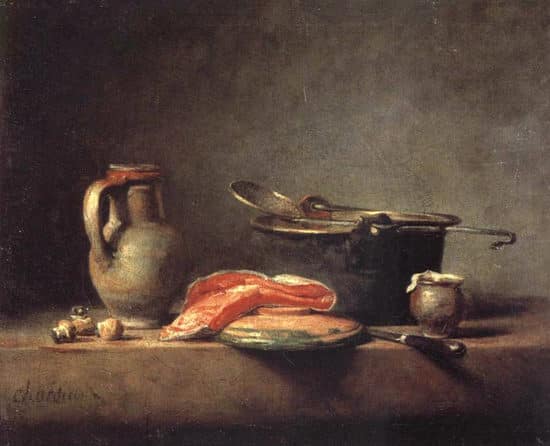
'And after drawing comes composition. A well-composed painting is half done'
Pierre Bonnard
Imagine a lovely drawing of a house with a path meandering upwards to it, copse either side in careful balance, a archetype mural scene that just 'works'.
Where is this masterpiece? The Tate? The National?
No, stuck to your fridge door, created by a 4-year-sometime.
Equally a young child, visual harmony and limerick comes naturally.
Children seem to start out with a near perfect sense of composition if yous have small children or are lucky enough to have any of your old drawings you created every bit a kid I'm sure you'll find the same to exist true.
Younger children encounter the edges of the paper as a whole frame to fill up, and they often fill up them with a swell sense of remainder.
When you start to abound upwardly, you know – really sometime similar 9 or 10, that'south where the drawing problems start. The focus shifts and is aimed away from composition to the pursuit of something far more than important, where the accolades are huge and respect even greater, the quest for the ultimate prize …… realism.
A reframing of priorities
The importance that was in one case placed on the edges of the page, the 'wholeness' of the piece are disregarded in favor of singular objects, and the representation of these objects as accurately and as detailed equally you can possibly make them.
The prize is no longer for limerick, a 10-year-old doesn't care, the focus is on accuracy and realism especially 'hard things to draw' like hands or faces. Merely the ultimate goal, the existent award winner is this….If you can draw a crumpled tin of Coke realistically yous are rex of the art room.
The simplest way to commencement
In one case yous take diverted from the path of composition in childhood it is difficult to go information technology back, and you will have a natural tendency to place objects in the centre of a piece, this is due to the stiff symbol systems formed in babyhood.
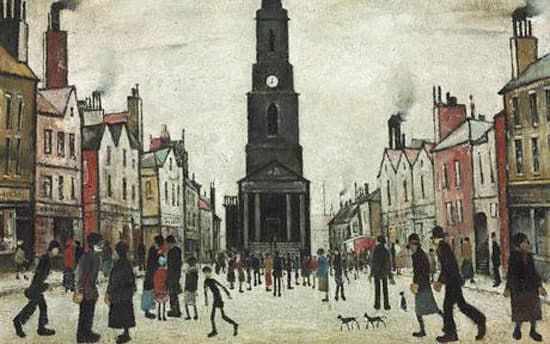
Lowry embraced this simplistic quality resulting in his paintings looking childlike.
It is not but through the treatment of the pigment, but the composition of his painting where everything is biased towards the center. If you want to make the bound towards a more sophisticated limerick there are a few things to consider.
Choosing a format, square or rectangle
A format is just another word for shape, and this comes down to personal preference. From squares, rectangle, panoramic. The easiest shape to create a counterbalanced composition is a rectangle, only similar an A4 piece of paper.
The rectangular format: this is an absolute classic and extremely flexible format. When a rectangle is displayed with its shorter side across the height it is known equally 'portrait format' and with its longer side across the top 'landscape format'.
The square format: This can work extremely well or very badly. You very rarely see a square old master painting. This is because it is harder to balance a painting that has lots of elements inside, for example, a collection of figures in a mural inside a square format. It tin can look awkward very easily. However, using a foursquare format for a more than contemporary subject, an abstract or a minimalist seascape, tin can be very effective.
3 is the magic number
- A composition is almost variety just "don't make any two things the same"
- The "Rule of Thirds" can exist key to creating residue in mural painting
- Make sure the shapes, spaces, and gaps between objects are all unlike.
com·po·si·tion/ˌkämpəˈziSHən/Substantive
1. The nature of something's ingredients or constituents; the way in which a whole or mixture is made up.
2. The activity of putting things together; germination or construction.
Composition can exist confusing and hard to pin downwardly, you don't really notice skilful composition in a painting information technology is just in that location, which is why information technology is 1 of my 7 principles of painting . The dictionary definition to a higher place doesn't necessarily assist usa. 'the action of putting things together' well, this is truthful but the actions of putting things together then they 'work' is harder to explicate.
If color mixing is almost relationships, the warm to the cool, the bright to the muted so composition is about variety- busy to at-home, big and small-scale.
Don't make any 2 things the aforementioned. If you've got a row of debate posts going into the altitude – check the gaps, they should all be dissimilar.
If yous take a unproblematic still life with a jug and some fruit – check the heights, they should all exist different, check the width, they should all be different.
This seems very straightforward, and it is. It is just a elementary mode of analyzing your initial gear up up. Is this method true for all paintings? No, only the more than you lot await, the more you will notice this to be true.
The dominion of thirds
What is the Rule of Thirds?
The rule of thirds is very commonplace in photography. It instantly helps to add tension, balance and interest to your photo merely applies every bit to the composition in painting. When creating a mural composition this is what you do:
1. Divide your page horizontally into 3.
2. Determine whether to have your horizon on the top 3rd or the bottom 3rd (the lesser third is always easier to balance, information technology helps to make the sky look vast and imposing).
3. Split the vertical into thirds.
4. Marshal areas of focus at the intersection betwixt the lines.
5. Curiosity at your genius
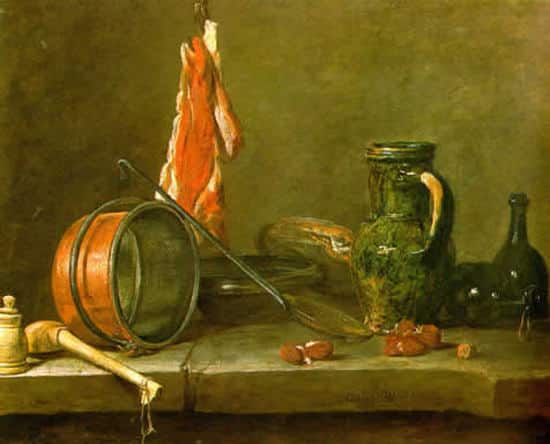

You can see in the Chardin painting above how there are numerous examples of aligning objects within the rule of thirds, the top of the jug aligns with summit horizontal line and sits butted up to the vertical line, even the superlative of the funny fiddling pot on the far left side sits on the bottom horizontal line, to name a few.
Pro tip: If you have a Mac, iphoto does all the work for yous. It can change the size and the rule of third lines are already on the screen for you. Align, resize, repeat.
How your digital photographic camera can assistance your composition
Your digital camera probably has a viewfinder function congenital in, often chosen grid. It again overlays the rule of thirds over your image, but align of import compositional elements along these lines or their intersections and voila… instant painting.
A word of warning
Dominion of thirds can work very well inside a rectangle, however, for landscapes squares tin can be harder to create a balanced painting even when sticking to the 'rules'.
A Brief History
The rule of thirds was get-go written down by John Thomas Smith in 1797. In his book Remarks on Rural Scenery:
"Rule of thirds", (if I may be allowed so to phone call it)…, in a design of mural, to determine the sky at most 2-thirds ; or else at about one-third, so that the fabric objects might occupy the other two : Over again, two thirds of one element, (every bit of water) to one third of another chemical element (as of land); and then both together to make but i third of the picture, of which the two other thirds should go for the sky and aerial perspectives."
If you put the principle of 'no two spaces the aforementioned' with the 'rule of thirds' y'all tin create pleasing compositions very easily. If we analyze the quote below past Sir Joshua Reynolds we can see how both these points are touched upon.
" Two singled-out, equal lights, should never appear in the same picture : One should be principal, and the residual sub-ordinate, both in dimension and caste : Diff parts and gradations lead the attention easily from function to part, while parts of equal advent concord it awkwardly suspended"
Sir Joshua Reynolds
This last comment is the fundamental, nobody wants a painting 'awkwardly suspended'. He also comments on the importance of contrast when creating a harmony to your piece of work:
"And to give the utmost force and solidity to your work, some part of the picture should exist as light, and some as night as possible : These 2 extremes are so to be harmonized and reconciled to each other."
Sir Joshua Reynolds
The golden mean
Classical paintings had a very scientific and structured arroyo, with lots of confusing things like root rectangles and gilt means. They are oft more than mathematical and planned out than you would ever imagine….whooahh in that location, we are moving into complicated classical territory which deserves a proper explanation, which I volition address in a futurity post.
The primal betoken to recall with limerick is nigh variety – but as Reynolds says ' Diff parts and gradations lead the attention easily from part to office' then add diverseness in your pieces and start with a rectangle canvass.
You might also similar:
The rule of thirds in landscape painting

Source: https://willkempartschool.com/the-secret-of-good-composition/
Posted by: andersonarou1937.blogspot.com
0 Response to "What Conclusion Can You Draw Concerning The Base Compositions Of The Two Samples? Explain."
Post a Comment